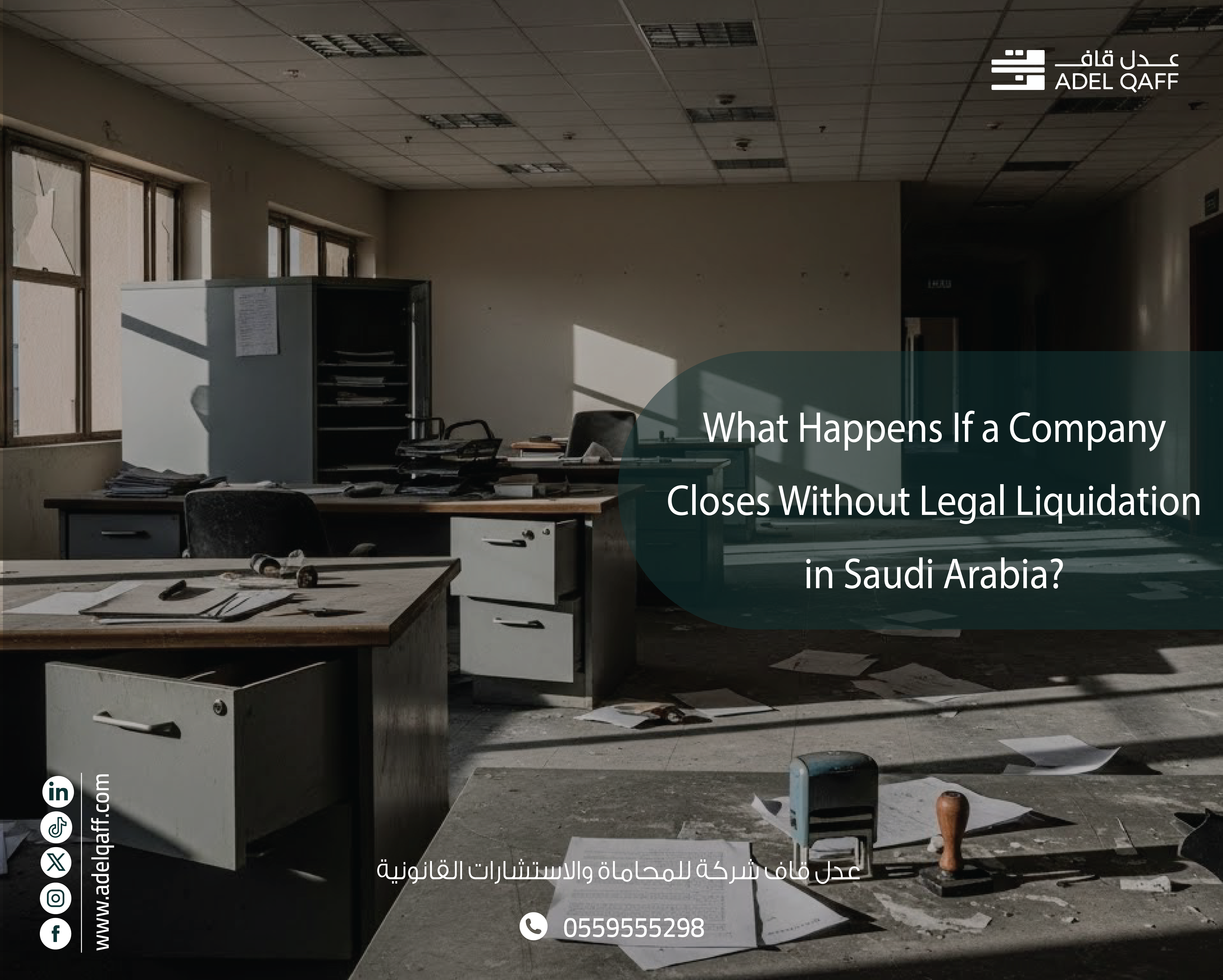
What Is Legal Liquidation in Saudi Arabia?
Legal liquidation is the formal process of:
Settling company debts and obligations
Collecting receivables
Distributing remaining assets
Deregistering the company from authorities
It ensures that the company exits the market lawfully and cleanly, without leaving unresolved liabilities.
What Does “Closing Without Liquidation” Mean?
A company is considered closed without liquidation when:
Operations stop, but the company remains legally registered
Licenses expire without formal closure
The company is abandoned
No liquidator is appointed
Debts and obligations are left unresolved
This situation is more common than many business owners realize — and highly risky.
Legal Consequences of Closing Without Liquidation
1. Continued Legal Existence of the Company
Even if operations stop, the company:
Still exists legally
Remains subject to Saudi laws
Continues to accumulate obligations
Authorities do not consider a company closed unless liquidation is completed.
2. Accumulation of Fines and Penalties
Failure to liquidate may lead to:
ZATCA penalties (tax and Zakat)
Ministry of Commerce fines
Municipal or sectoral penalties
License renewal penalties
These fines continue to accrue over time.
3. Personal Liability for Directors and Shareholders
Under Saudi Company Law, directors and shareholders may face personal liability if:
The company is abandoned
Creditors are harmed
Assets are concealed
Obligations are ignored
In some cases, courts may pierce the corporate veil.
4. Inability to Start or Manage New Businesses
Unresolved company closures may:
Block shareholders or directors from registering new companies
Appear in regulatory records
Trigger future compliance reviews
This directly affects future business opportunities.
5. Exposure to Claims by Creditors and Employees
Without liquidation:
Creditors can still file claims
Employees may pursue labor disputes
Government entities may enforce compliance
Claims do not disappear simply because operations stop.
6. Criminal and Regulatory Risks
In severe cases, risks may include:
Allegations of fraudulent abandonment
Misrepresentation to authorities
Obstruction of regulatory processes
This risk increases if records are missing or obligations are concealed.
Common Scenarios Where This Happens
Startups that run out of funding
Family businesses that stop operating informally
Foreign investors exiting the Saudi market
Companies with unresolved disputes
Ignoring liquidation is often seen as a “temporary pause” — legally, it is not.
How to Properly Close a Company in Saudi Arabia
Proper closure requires:
Board or shareholder resolution
Appointment of a licensed liquidator
Public notice of liquidation
Settlement of debts and obligations
Final tax and Zakat clearance
Deregistration from authorities
Each step must comply with Saudi regulations.
Why Legal Liquidation Protects You
Legal liquidation:
Limits future liability
Protects personal assets
Clears regulatory records
Enables clean exit or future investment
It is a risk management tool, not just a formality.